
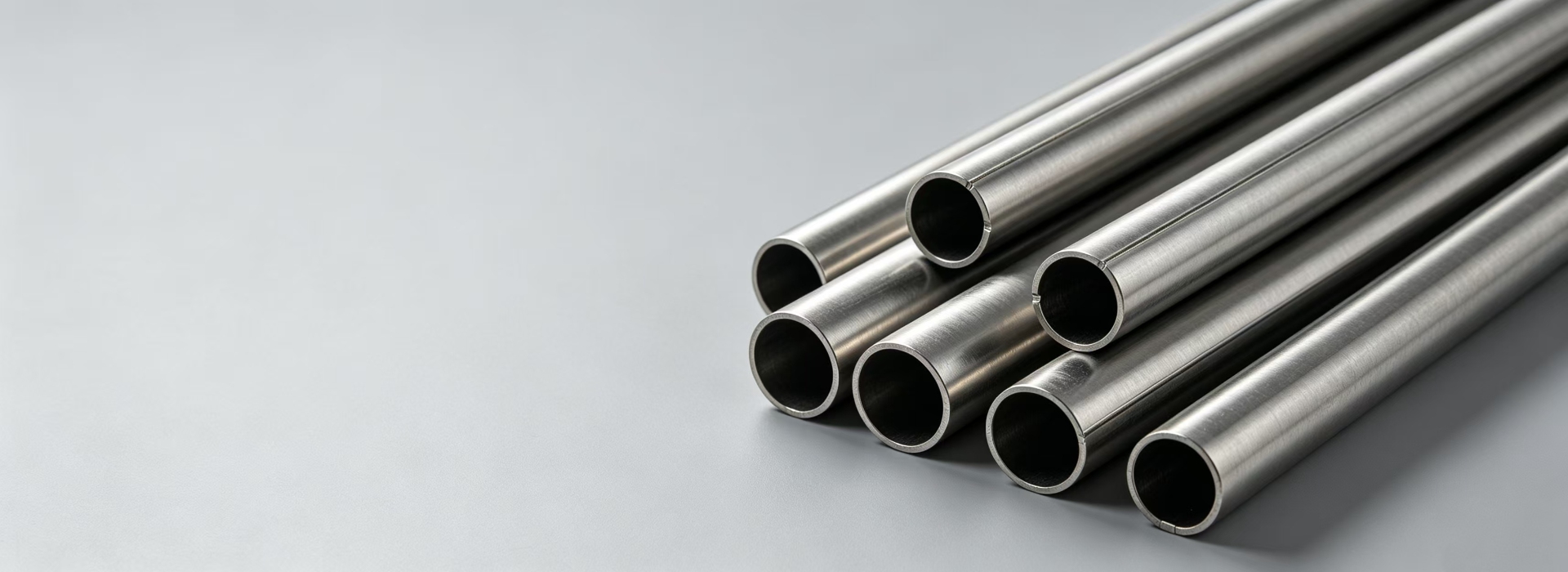
Why Choose Our Stainless Steel Welded Pipe?
Our stainless steel welded pipe follow a standard production process: The raw steel strip undergoes uncoiling, leveling, looping, and forming before welding; the inner and outer weld beads are then removed, followed by pre-straightening, induction heat treatment (bright or black finish), sizing, and straightening. Afterward, the pipes undergo eddy current testing, cutting, and hydrostatic testing in sequence. Pipes that pass inspection may undergo either internal and external polishing or acid pickling, followed by a final inspection. Once verified as defect-free, they are packaged and stored in the warehouse.
Stainless steel maintains good mechanical properties over a wide temperature range. It can withstand high temperatures up to 1,100 °C and low temperatures as low as -196 °C, making our welded stainless steel pipe suitable for applications involving extreme temperature conditions.
Stainless steel features high strength, good ductility, and excellent toughness, enabling our welded stainless steel pipe to withstand high pressure, heavy loads, and severe impacts without failure. Their excellent fatigue resistance also allows the pipes to withstand cyclic stress.
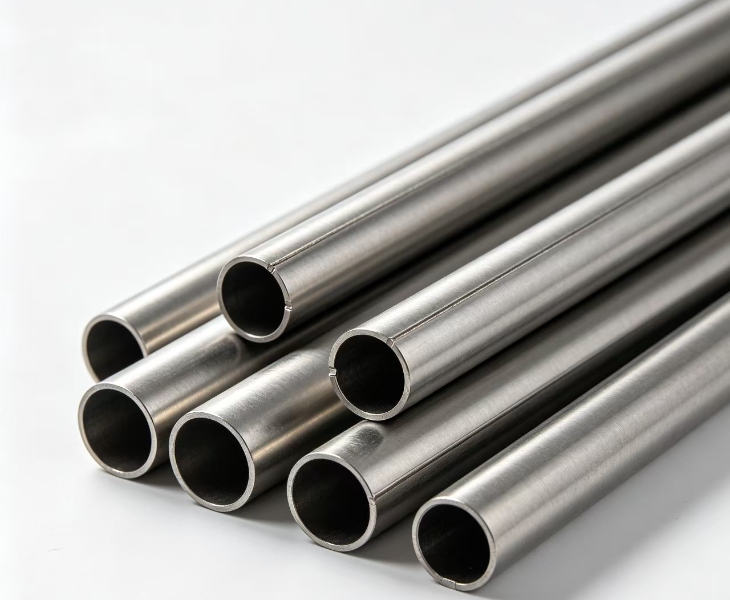
Professional Stainless Steel Welded Pipe Supplier
As a professional supplier of stainless steel pipe, Verixor offers welded stainless steel pipe suitable for various industrial and engineering projects. Products are available in grades such as 201, 304, 304L, 316, and 316L based on specific requirements; the actual scope of supply is subject to order confirmation.
Depending on the welding process, the pipes may be manufactured using resistance welding (ERW), Tungsten Inert Gas (TIG) welding, electric fusion welding (EFW), or laser welding. Products are available with various surface finishes and can be cut to length or otherwise processed according to project requirements.
When purchasing, we recommend confirming the applicable standards, material grades, dimensional tolerances, surface requirements, and inspection items in advance to ensure the products meet the actual conditions of use. If you have any needs for stainless steel welded pipe, please feel free to contact us.
Stainless Steel Welded Pipe Product Categories

Small-diameter stainless steel welded pipes feature a smaller diameter and a compact design, making them suitable for precision piping, equipment components, and small-scale industrial systems.

Large-diameter stainless steel welded pipes feature a larger diameter and internal space, making them suitable for large-scale piping systems, industrial equipment, and construction projects.
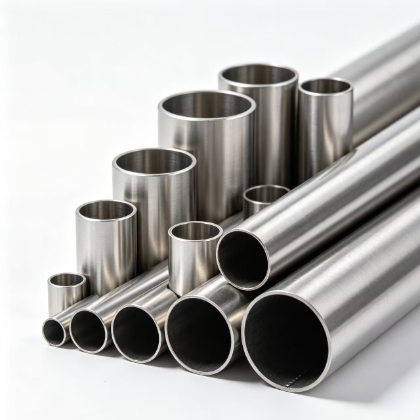
Precision stainless steel welded pipes can be custom-made in both small and large diameters. They feature higher dimensional accuracy and stricter tolerance control, making them suitable for applications that demand high dimensional consistency and assembly precision.
Why You Need Stainless Steel Welded Pipe?

The smooth inner and outer surfaces of the pipes reduce flow resistance and minimize scale buildup.

Stainless steel is non-toxic and easy to clean, and its smooth surface helps reduce bacterial growth.

Pipe lengths can be customized to meet project requirements, reducing on-site cutting and material waste.

Stainless steel welded pipes are easy to cut, bend, form, and weld, allowing for flexible processing, assembly, and installation.
Flexible Welding Processes Ensure Reliable Performance
Verixor welded stainless steel pipes utilize appropriate welding processes—such as electric resistance welding (ERW), electric fusion welding (EFW), tungsten inert gas (TIG) welding, and laser welding—based on tube specifications and application requirements. From efficient production to precise, clean weld designs, we provide pipe solutions tailored to the needs of various projects, helping to ensure weld strength, durability, and stable product performance in demanding environments.

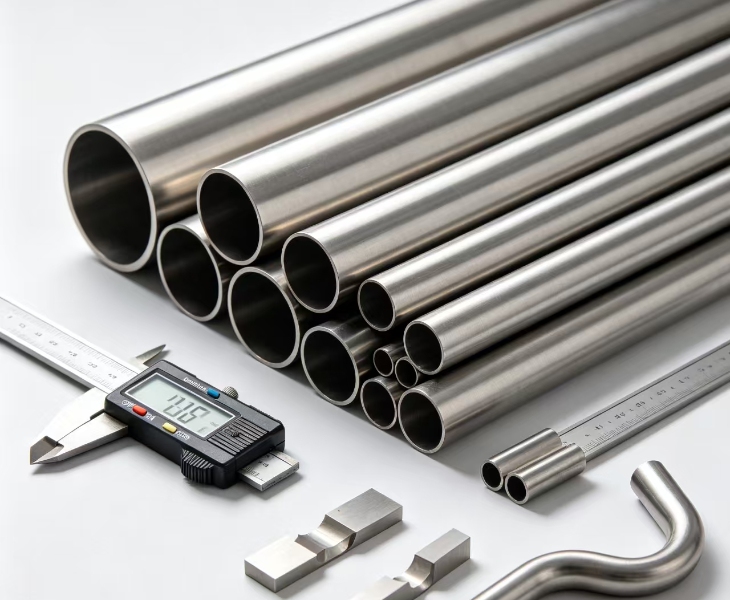
Precise Dimensional Control for Enhanced Processing Efficiency
Verixor stainless steel welded pipes ensure excellent consistency in outer diameter and wall thickness through controlled forming and sizing processes. This dimensional stability helps you achieve more predictable processing results during cutting, bending, slotting, and assembly, reducing the need for fit adjustments, minimizing material waste, and preventing production delays—thereby improving overall processing efficiency.
Why Choose Verixor As Your Stainless Steel Welded Pipes Partner?


With over 10 years of industry experience and more than 10,000 square meters of production facilities, Verixor employs a variety of inspection methods in the manufacturing process of stainless steel welded pipe. Through mechanical property testing, ultrasonic testing (UT), eddy current testing (ECT), hydrostatic testing, and chemical composition analysis using a spectrometer, we help verify material composition, pipe integrity, and product quality. This systematic quality control process helps you mitigate quality risks, meet project specifications, and purchase stainless steel welded pipe with greater confidence.
Stainless Steel Welded Pipes for Multiple Applications

For piping systems with specific requirements regarding material hygiene, cleanliness, and surface quality, the relevant product standards and hygiene requirements must be verified.

Used in certain process piping and equipment systems; when selecting products, special attention should be paid to media compatibility, cleaning requirements, and applicable standards.

Select suitable welded stainless steel pipes based on the material’s corrosion resistance, operating temperature, pressure, and media conditions.

Used in certain water treatment equipment and piping systems; selection must be based on water quality, pressure, and operating environment.
Stainless Steel Welded Pipe Tolerance Table
We supply standard stainless steel welded pipes, as well as precision stainless steel welded pipes with tight dimensional tolerances for use in precision equipment applications.
Below is the dimensional tolerance table for precision stainless steel welded pipe.
| Tolerance Item | Condition / Classification | Specification Range | Ordinary Grade | Higher Grade | Grade I | Grade II | Additional Requirements |
| Outside Diameter Deviation | Welded Condition | D < 20 mm | ±0.30 mm | ±0.20 mm | — | — | — |
| Outside Diameter Deviation | Welded Condition | 20 ≤ D < 50 mm | ±0.50 mm | ±0.40 mm | — | — | — |
| Outside Diameter Deviation | Welded Condition | D ≥ 50 mm | ±1% D | ±0.8% D | — | — | — |
| Outside Diameter Deviation | Solid Solution Condition | D < 13 mm | ±0.25 mm | ±0.20 mm | ±0.10 mm | ±0.15 mm | — |
| Outside Diameter Deviation | Solid Solution Condition | 13 ≤ D < 25 mm | ±0.40 mm | ±0.30 mm | ±0.15 mm | ±0.20 mm | — |
| Outside Diameter Deviation | Solid Solution Condition | 25 ≤ D < 40 mm | ±0.60 mm | ±0.40 mm | ±0.15 mm | ±0.20 mm | — |
| Outside Diameter Deviation | Solid Solution Condition | 40 ≤ D < 60 mm | ±0.80 mm | ±0.60 mm | ±0.20 mm | ±0.30 mm | — |
| Outside Diameter Deviation | Solid Solution Condition | 65 ≤ D < 90 mm | ±1.00 mm | ±0.80 mm | ±0.20 mm | ±0.30 mm | — |
| Outside Diameter Deviation | Solid Solution Condition | 90 ≤ D < 140 mm | ±1.20 mm | ±1.00 mm | ±0.25 mm | ±0.30 mm | — |
| Outside Diameter Deviation | Solid Solution Condition | 140 ≤ D < 300 mm | ±1.5% D | ±1.0% D | ±0.25 mm | ±0.30 mm | — |
| Outside Diameter Deviation | Solid Solution Condition | 300 ≤ D < 500 mm | ±1.0% D | ±0.8% D | ±0.30 mm | — | — |
| Outside Diameter Deviation | Solid Solution Condition | D ≥ 500 mm | By agreement | By agreement | — | — | — |
| Wall Thickness Deviation | S ≤ 4 mm | — | +0.5 / −0.6 mm | — | ±10% S | ±10% S | Minimum permitted deviation: ±0.2 mm |
| Wall Thickness Deviation | S > 4 mm | — | ±10% S | — | ±10% S | ±10% S | Minimum permitted deviation: ±0.2 mm |
| Out-of-Roundness | Additional Requirement | — | — | — | ≤1.5% D | — | — |
| Straightness / Bending | General Requirement | — | — | — | 2.0–2.5 mm/m | — | — |
| Straightness / Bending | Grade I | — | — | — | 1.0 mm/m | — | — |
| Straightness / Bending | Grade II | — | — | — | 3 mm/3 m | — | — |
| Straightness / Bending | Additional Requirement | — | — | — | 5 mm/3 m | — | — |
| Weld Seam Height | — | — | — | — | — | — | Maximum 1.5 mm |
| Hardness | Other Requirements | — | — | — | — | — | HRB ≤ 90 |
Notes:D = Outside diameter; S = Wall thickness
Food processing projects typically require a comprehensive evaluation of material grades, the media the product will come into contact with, internal surface quality, weld treatment, cleaning methods, and applicable hygiene standards. Whether 304 or other stainless steel grades are suitable should be determined based on the food media, cleaning agents, temperature, and actual operating conditions. When purchasing, it is also important to clarify pipe standards, surface requirements, inspection documentation, and traceability needs. For sanitary-grade applications, decisions should not be based solely on the material grade; it is also necessary to verify that the product meets specific process and hygiene requirements.
Whether stainless steel welded pipe can be used in pressure-bearing applications depends on the product’s manufacturing standards, material grade, outer diameter, wall thickness, weld quality, and actual operating conditions. Pressure, temperature, and the nature of the medium all affect the product’s suitability. Before purchasing, you should confirm the design pressure, operating temperature, medium characteristics, and applicable standards, and verify that the product meets the relevant requirements.
Before welding stainless steel pipes, use appropriate gas shielding baffles or plugs to seal the area around the weld, then introduce argon gas to displace the air from inside the pipe. Allow sufficient time for purging and verify that the oxygen content meets welding requirements before starting the weld. Argon gas should be continuously introduced for protection during the root pass and, when necessary, during the weld cooling phase.
Proper gas shielding helps prevent oxidation of the pipe’s inner wall, reduces welding defects, and maintains the stainless steel pipe’s corrosion resistance. During actual operation, always follow the project’s approved welding procedure specification (WPS).
The weld zone may exhibit different corrosion resistance characteristics than the base material due to heat input during welding, surface oxidation, and subsequent treatment methods. If the weld zone is not properly treated, it may increase the risk of localized corrosion under certain conditions. Therefore, when purchasing, in addition to considering the stainless steel grade, it is important to verify the welding process, the surface condition of the weld, and any necessary post-treatment requirements. For highly corrosive applications, an assessment should be conducted based on the service medium and project specifications.
To stick weld stainless steel pipe, first clean the pipe edges to remove oil, dirt, and surface contaminants. Select a suitable stainless steel stick electrode, such as E308L-16 for compatible 304 stainless steel applications, and set the welding current according to the electrode size, pipe thickness, and welding position. Tack weld the joint to maintain alignment, then weld using a controlled arc and consistent travel speed. Remove slag between passes and inspect the finished weld for defects. For critical piping applications, follow the approved welding procedure specification (WPS) and applicable project standards.
Related Products
 Stainless Steel Square Tubing
Stainless steel square tubing features four sides of equal width and a uniform cross-section, ensuring structural stability.
 Stainless Steel Round Pipe
Stainless steel round pipe features a circular cross-section, ensuring even stress distribution and offering a wide range of specifications.
 Stainless Steel Seamless Pipe
Stainless steel seamless pipe feature a seamless construction, offering uniform structure and reliable strength, and are available in custom specifications.
 Stainless Steel Sheet Metal Fabrication Services
Stainless steel sheet metal fabrication services use customized processes such as cutting, bending, welding, and surface finishing to produce stainless steel components that meet your project requirements.
Production Process
Small-Diameter Stainless Steel Welded Pipe
Raw Material Procurement and Inspection → Slitting of Coils and Sheets → Steel Strip Forming → Automatic Welding → Weld Grinding → In-Line Straightening → In-Line Cut-to-Length → Heat Treatment → Optional Off-Line Straightening / Pickling and Passivation / Off-Line Polishing → Final Inspection of Finished Products → Packaging and Shipping
Large-Diameter Stainless Steel Welded Pipe
Raw Material Cutting → Forming → Lock Welding and Positioning → Automatic Longitudinal Welding → Trimming → End Trimming → Hydrostatic Testing → Optional Polishing of Large Pipes → Final Inspection of Finished Products → Packaging and Shipping