

Precision and Flexible Custom Stainless Steel Sheet Metal Fabrication
Verixor is a reliable manufacturer of stainless steel sheets that supplies metal components for projects worldwide following your designs and specifications. Metal components fabricated by us will be manufactured according to your measurements, holes, shape, and bending. The processes used at Verixor to fabricate metal components include laser cutting, CNC bending, welding, riveting, and drilling.
Depending on the project, there may be certain materials and surface finishes to choose from. At Verixor, there are several grades of stainless steel, as well as matte, brushed, mirror-polished, and PVD colored finishes available. Using the right material, fabrication process, and finish, you can ensure that the components meet your design and finish expectations.
Stainless Steel Sheet Metal Fabrication Capabilities
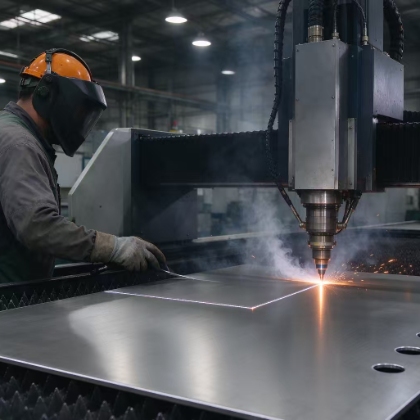
Cuts stainless steel plates as per your drawings in specific forms and sizes with precise edges and hole formations.
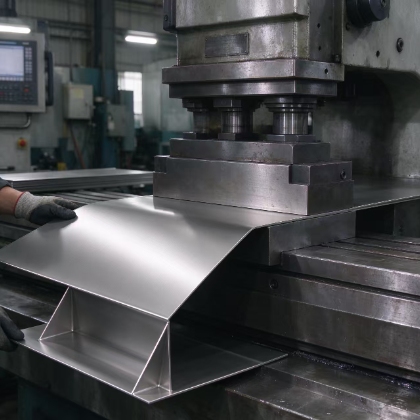
Shapes sheet metal as per required angles and forms to fit component requirements and assembling purposes.

Connects stainless steel components together for strong joint creation for framing, enclosures, brackets, and other custom assemblies.
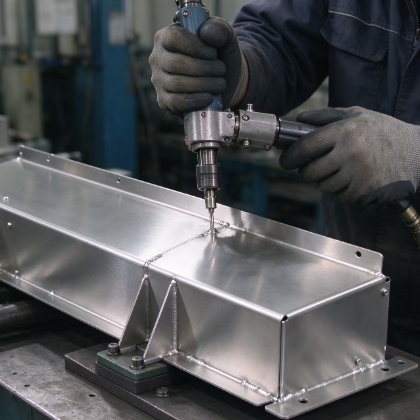
Connects metal components using rivets as an alternative method to join metal components.
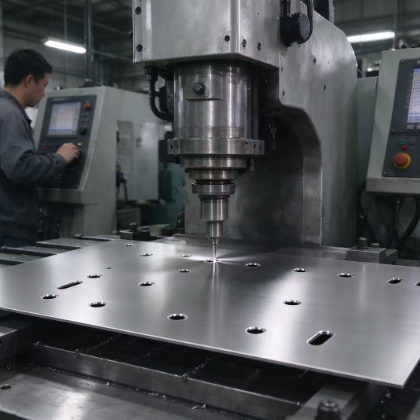
Punches holes in required places as per your specifications for installation and component assembling.
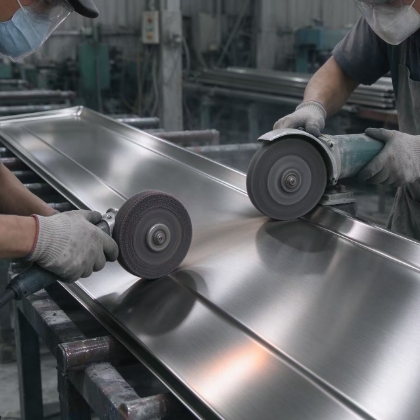
Polishes/brushes the surface of stainless steel as per your desired specification.
Fabrication Features That Help Your Project Run Smoothly

Includes matte, brushed, mirror polished, sand blasted, and PVD coated surfaces.

Will use stainless steel grades or mild steel in relation to the project and the budget.

Coordinates dimensions, tolerances, and assembly requirements of the parts.

Tests for dimensions, surface finish, and specifications.
Integrated Sheet Metal Fabrication for Your Projects
Verixor coordinates the entire fabrication process for architectural metal components, from material sourcing and laser cutting to CNC bending, welding, surface finishing, and pre-shipment inspection. You only need to provide your drawings, dimensions, or project requirements. We manage the production workflow around your specifications, helping you reduce supplier coordination, maintain consistency between fabrication stages, and keep your project moving with fewer handoff issues.

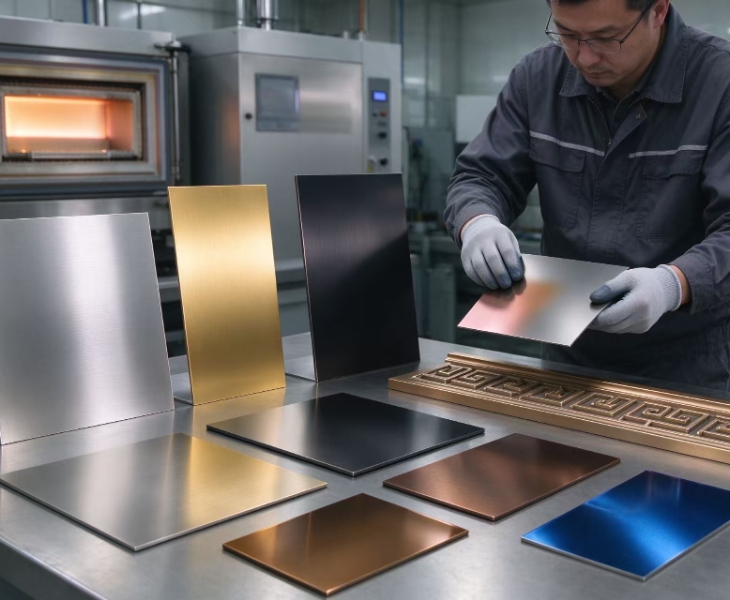
Custom Stainless Steel Finishes with PVD Coating Options
The right surface finish can make a real difference to the final appearance of architectural metalwork. Verixor offers matte stainless steel, mirror polishing, and PVD coating in a range of colors, including titanium gold, rose gold, black, antique bronze, brown, tea, sapphire blue, and gray. You can choose finishes that complement your design concept, coordinate metal components with surrounding materials, and maintain a consistent appearance across different parts of your project.
Your Trusted Partner for Stainless Steel Sheet Metal Fabrication
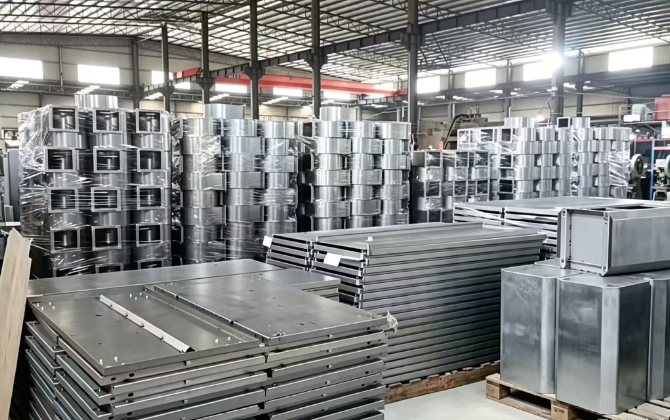
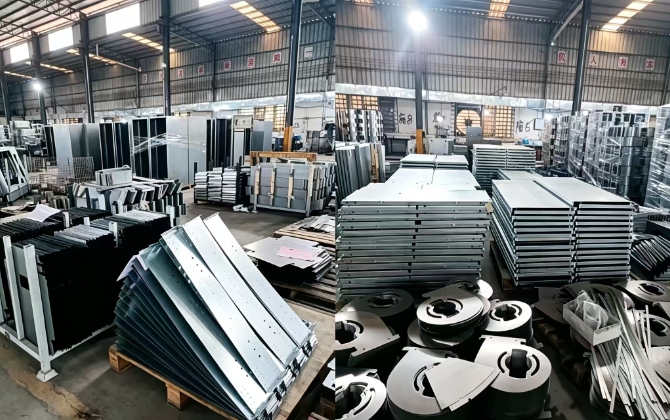
The Verixor team is well-versed in manufacturing with an average of over 10 years in experience and we have a production facility covering an area of more than 10,000m². Our QA process involves the tracking of materials, parts, and fasteners during the entire production process, starting from design specs and qualifying our suppliers all the way through to inspecting each weld that has been completed. We keep our welding procedures and records of qualified welders and welding inspectors.
Application Scenarios of Stainless Steel Sheet Metal Fabrication

Metal cladding and facade panels, custom ceilings, and any other decorative metal elements can be created using sheet metal fabrication techniques like laser cutting, bending, and PVD coating.

Gate frames, handrails, guardrails, and various door and window fittings should have correct dimensions and strong joints. Sheet metal fabrication including custom cutting, bending, welding, and drilling will help achieve it.
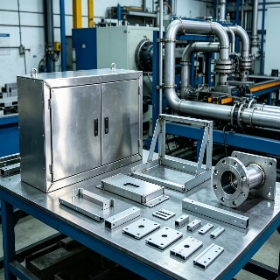
Equipment enclosures, control panels, mounting frames, and brackets should have exact dimensions and be designed to fit the structure of the machinery and accommodate other components. Laser cutting, bending, welding, and riveting will create components according to specific drawings.
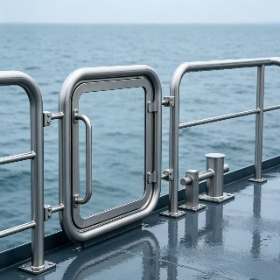
Metal components that are exposed to the seaside environment or to the wet outdoor climate should be more resistant to corrosion. Choosing a proper grade and surface treatment of stainless steel is crucial here, while customization of sheet metal fabrication will allow creating parts for outdoor hardware.
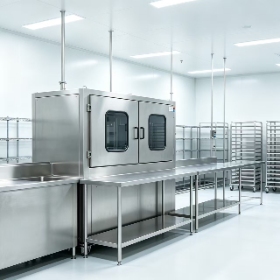
Equipment panels, storage racks, and other metal components used in food facilities need to suit their working environment and cleaning routines. Cutting, bending, welding, and polishing help produce parts with practical shapes, accessible surfaces, and dimensions suited to their intended use.
- Stainless Steel Sheet Metal Fabrication Specifications
- Stainless Steel Sheet Metal Fabrication Tolerances
| Feature | Description |
| Maximum Processing Length | Up to 3000 mm; custom processing solutions available for extra-long specifications upon request |
| Sheet Thickness | 0.5 / 0.8 / 1.0 / 1.2 / 1.5 / 2.0 / 2.5 / 3.0 / 4.0 / 5.0 mm |
| Material Options | Stainless Steel 201 / 304 / 316 / 316L |
| Fabrication Processes | Laser Cutting, Punching, Bending, Spot Welding, Seam Welding, Riveting, Grinding |
| Surface Finishes | Matte, Brushed, Mirror-Polished, Sandblasted, PVD Coating (Decorative Wear-Resistant Coating) |
| Customization | Custom Dimensions, Shapes, and Processing Solutions Based on Your Drawings |
Joining Process Description
Spot Welding: Used for localized welding at specific points to secure sheet metal components. Weld seams are discontinuous, with minimal deformation and low cost. Not suitable for waterproof applications.
Seam Welding: Creates continuous welds along the entire seam, offering high strength and good sealing performance. Suitable for bathroom and shower products, but with higher processing costs.
Riveting: Uses rivets and riveting equipment to mechanically fasten sheet metal components. It is not a welding process, causes no heat-related deformation, and does not provide waterproofing.
| Feature | Tolerance |
| General Tolerances | ±0.2 mm (applicable to dimensions ≥10 mm; tolerances for smaller dimensions to be agreed upon separately) |
| Laser Cutting Tolerances | ±0.1 mm |
| Bending Tolerances | ±0.3 mm |
| Bend Angle Tolerances | ±1° |
| Punching Tolerances | ±0.1 mm |
Note: The above values represent standard machining tolerances. Please discuss any tighter tolerance requirements in advance based on your drawings.
Welding involves welding two parts of metal together through the weld seam and is applicable to framing, supporting, equipment enclosure, and parts assembly where continuity of the joints is required. Riveting, on the other hand, entails the mechanical fastening of different components and may prove better where welding is not practical or heat distortion cannot be tolerated.Choose which of these methods suits your project and ensure it is reflected in the drawings.
Matte finish refers to a finish without gloss while sandblasting is a finishing process that involves the use of abrasives in achieving a certain finish. The matte finish could as well be obtained from processes other than sandblasting.
The finish after sandblasting at 120 grit will depend on the media used, machinery setting, base material among others. You should obtain a sample of the finish and indicate on the drawings which areas are to remain untouched.
An effective way to keep costs low is to minimize complexity where possible. Using standardized hole sizes, eliminating unnecessary bends, keeping the shape simple, and using the same materials or finish for all relevant components will help you save processing steps. Moreover, it is vital to differentiate critical dimensions and characteristics from those that have some degree of tolerance and can vary during manufacturing. It will enable the fabricator to choose an appropriate process without affecting the functionality of the component.
Indeed, custom-made sheet metal parts can be fabricated using any geometries as per the requirements of the component design and manufacturing process. Laser cutting is responsible for cutting out the desired shape and openings in the metal, while CNC bending allows shaping the sheet to form required profiles. For complex components with multiple bends, openings, or welds, it is advisable to consider reviewing the component design.
You can provide engineering drawings, CAD files, or dimensioned sketches to communicate your fabrication requirements. Technical drawings should include overall dimensions, material thickness, hole positions, bend angles, and other critical details. If certain dimensions or tolerances are essential for installation, mark them clearly before production. Complete drawing information helps reduce misunderstandings and makes it easier to assess whether the design is suitable for the intended fabrication process.
Related Products
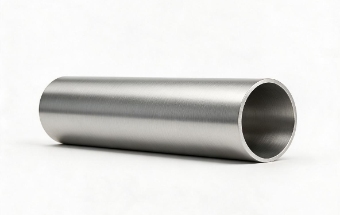 Stainless Steel Pipes
Stainless steel pipes offer good corrosion resistance, strength, and durability for industrial, construction, and fluid transportation applications.
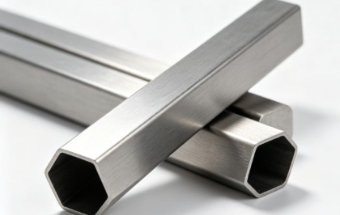 Special Shaped Stainless Steel Pipes
Special shaped stainless steel pipes are available in custom profiles and dimensions to meet specific structural, decorative, and industrial requirements.
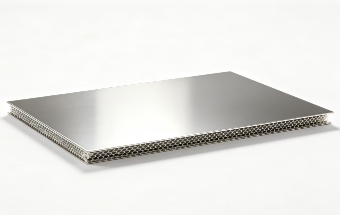 Stainless Steel Honeycomb Panels
Stainless steel honeycomb panels feature a lightweight honeycomb core and strong surface layers, offering high rigidity, structural stability, and a clean appearance.
 Steel Building Accessories
Steel building accessories include various metal components used for building connections, installation, and structural support, helping meet different construction requirements.