When looking for stainless steel sheet cutting fabrication, you might be wondering whether laser or plasma cutting is better for you. Both techniques are widely used and come with their own benefits. Knowing what they are and what they can do will help you make the right choice. In the guide below we look at laser cutting and plasma cutting in detail; highlighting the benefits and limitations of each. This will help you decide which is right for your project.
What Is Plasma Cutting?
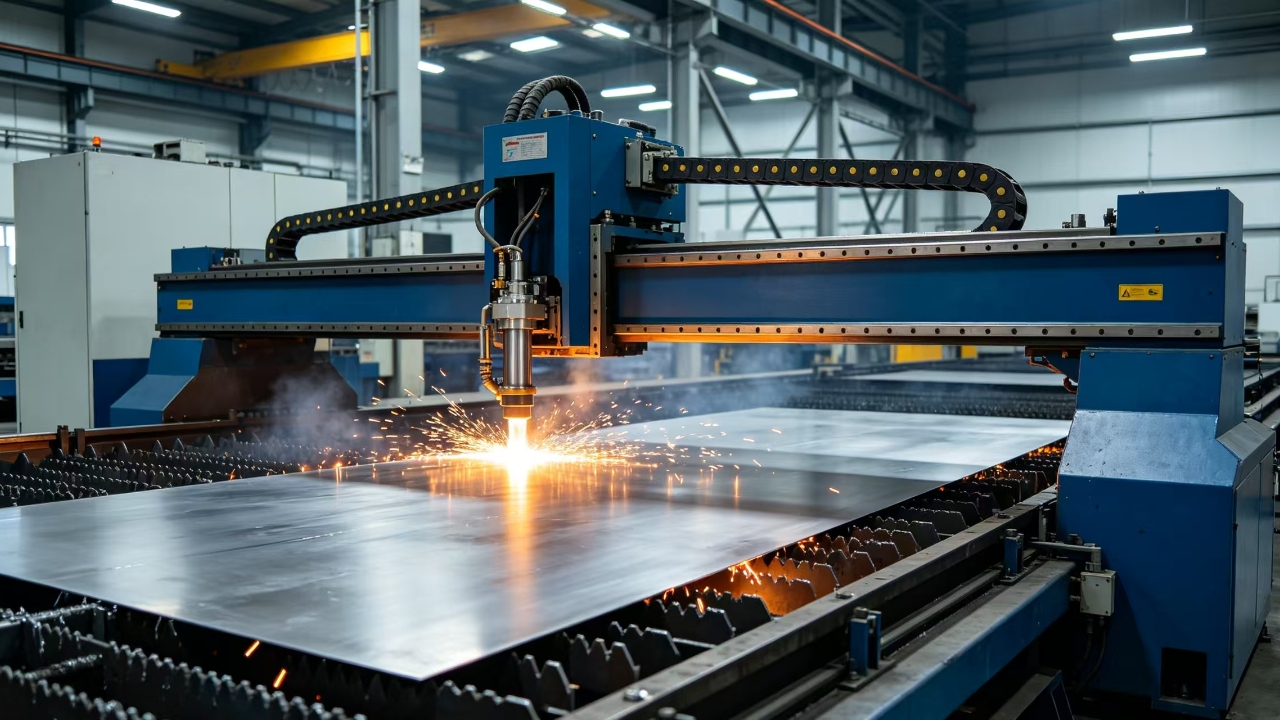
Plasma cutting uses a high temperature electrical conductive plasma stream to melt the metal. A compressed gas is passed through an electrically charged torch to create ionisation. This creates a plasma stream that melts the metal. The fast flowing gas removes the melted metal to create the cut.
As plasma cutting can cut relatively thick conductive metals it is often used in heavy fabrication, structural steel and industrial equipment.
What Is Laser Cutting?
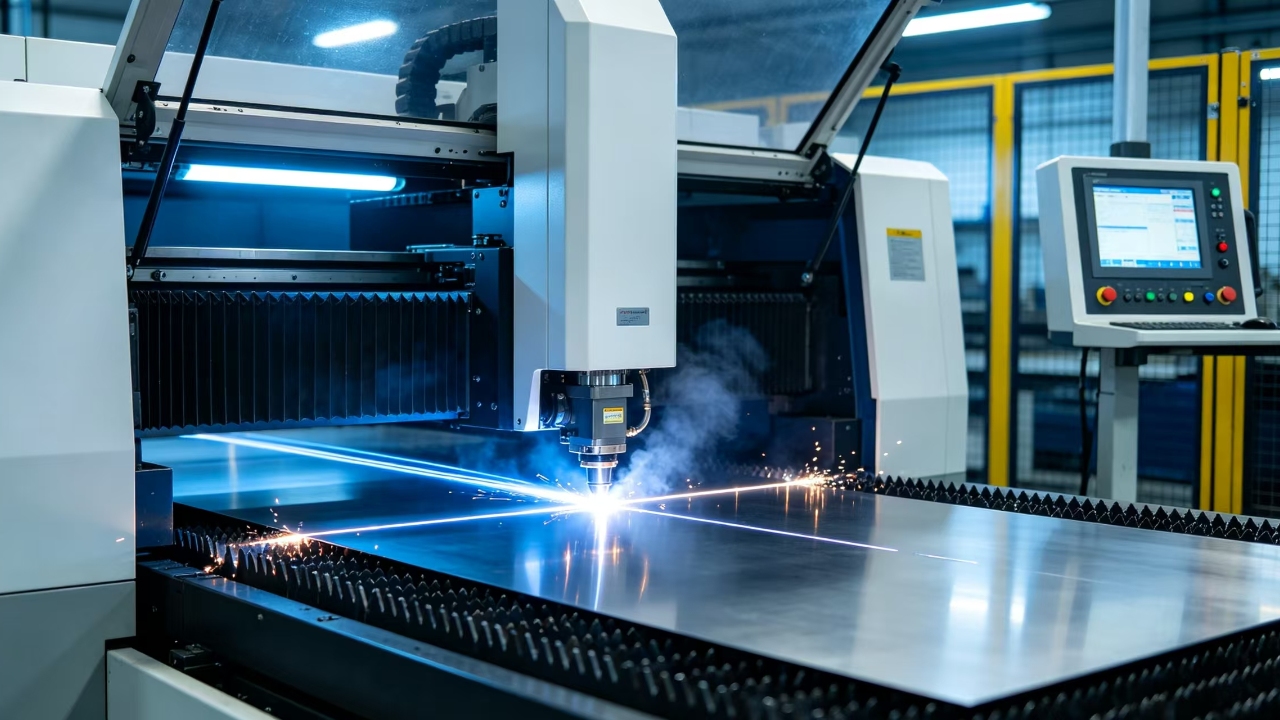
Laser cutting is a thermal technique that uses a highly focused beam of light to melt/burn/vaporise the metal. The melted material is removed using an assist gas (usually Nitrogen/Oxygen). This allows for accurate edges.
Fibre Laser cutting is widely used in stainless steel sheet fabrication. It provides high accuracy and very thin cut lines. This is great for cutting thin and medium thickness stainless steels with intricate designs.
Plasma Cutting vs. Laser Cutting: Key Differences
Whilst both techniques melt the stainless steel using heat, there are key differences to note when deciding what is best for your fabrication.
1. Accurate Cutting
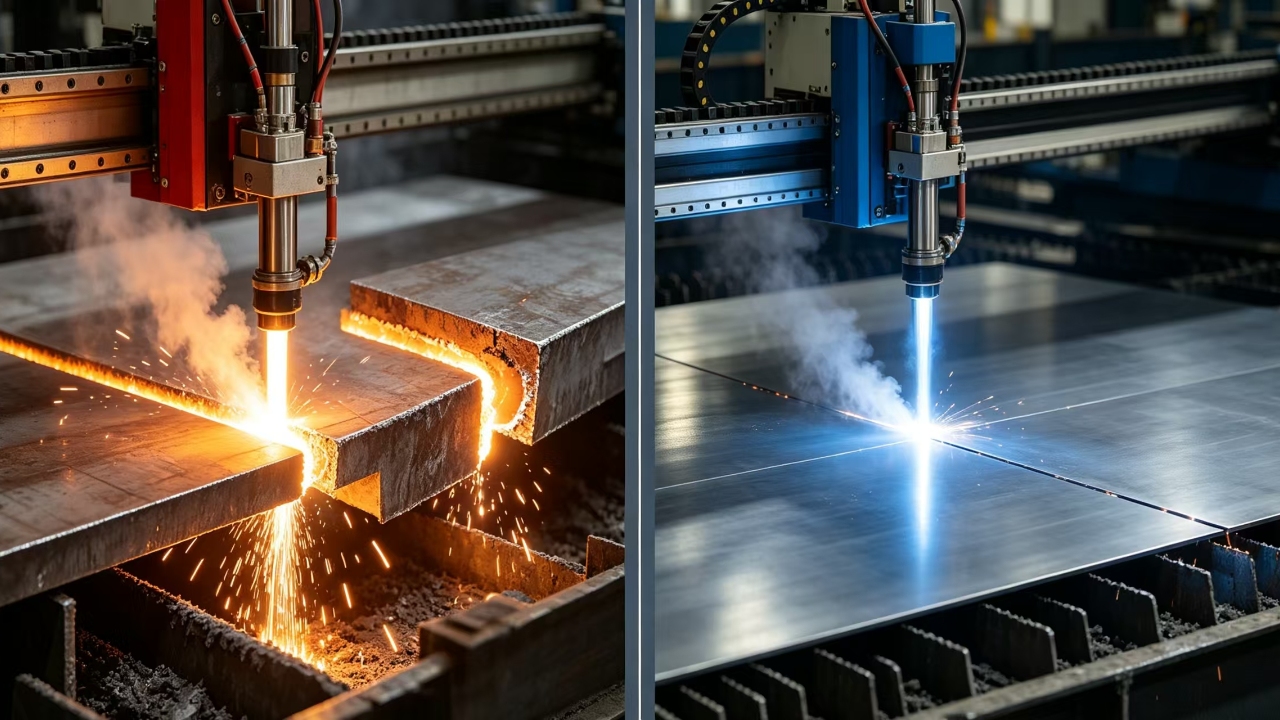
Laser cutting uses a focused beam to provide very accurate cuts. This can provide intricate designs, small holes and intricate shapes. With the right cutting conditions industrial fibre lasers can provide accurate cuts of ±0.1mm. The kerf width will be around 0.1mm – 0.3mm.
Plasma cutting has a wider arc so tight tolerances can be hard to achieve. Especially with thinner materials and intricate designs. Tolerances will be around ±0.5mm – ±1.5mm. The kerf width will be around 1mm – 3mm. Plasma cutting is generally better suited for thicker structural materials.
If you are looking to cut accurate brackets, equipment and stainless steel panels then laser cutting is generally the best option. This will help you get accurate dimensions and reduce any finishing on the edges. Plasma cutting is still a great option for cutting thicker materials with less tight tolerances.
2. Quality Edges
The quality of the cut edge will determine if any extra grinding is required.
Laser cutting will generally provide a smooth and clean edge. If using nitrogen as the assist gas the edges will be shiny with little oxidation.
Plasma cutting can leave a rough edge with more dross. There will also be more heat affected zones. Extra grinding may be required.
If you need your stainless steel parts to be visible, laser cutting can help reduce any extra processing.
3. Speed
The speed of cutting will depend on the thickness of the material, the power of the machine, cutting conditions and intricacy of the design.
Fibre Lasers generally provide faster cutting speeds for thin and medium thickness stainless steels. As they are automated using CNC machines they can be great for batch cutting and intricate designs.
Plasma cutting can be a competitive option for cutting thick metal plates. If you don’t require accurate edges or tight tolerances plasma could be a good option.
You should also think about how long it will take to load your material, position the material, finish it and check it.
4. Material Thickness
One of the most important factors to consider when deciding between plasma and laser cutting.
Laser cutting is commonly used to cut thin and medium thickness stainless steels. With higher powered fibre lasers you can cut thicker plates.
Plasma cutting can provide an advantage when cutting very thick conductive metal plates. It can be used to cut heavy duty materials where laser cutting may become slower and more expensive.
Industrial fibre lasers can commonly cut stainless steel up to around 12-15mm. Industrial plasma can cut much thicker plates. This will depend on the power of the machine, type of gas used, grade of material and the desired edge quality.
5. Cost of Equipment & Processing
Plasma cutting will generally have a lower cost of equipment. This can make it an appealing option for fabrication workshops cutting heavy structural materials.
Laser cutting machines will generally be more expensive to purchase and maintain. However they can reduce your overall costs due to faster processing times with thin materials. They can also help reduce material wastage and finishing.
When considering your quotes from fabrication suppliers you should think about:
Material wastage,Cutting time,Finishing,Accuracy,Labour and post processing.
The most cost effective option is the one that will give you the finished part you require at the lowest cost.
Plasma Cutting vs. Laser Cutting: Comparison Table
Below is a summary table showing the main differences between plasma and laser cutting.
| Comparison | Laser Cutting | Plasma Cutting |
| Cutting principle | Focused laser beam | Ionized gas arc |
| Cutting precision | High | Moderate |
| Kerf width | Narrow | Wider |
| Edge quality | Smooth and clean | Rougher, may have dross |
| Heat-affected zone | Generally smaller | Generally larger |
| Thin sheet processing | Excellent | Less suitable for precision work |
| Thick plate processing | Depends on laser power | Excellent |
| Complex shapes | Excellent | More limited |
| Material waste | Generally lower | Generally higher |
| Initial equipment cost | Higher | Lower |
| Secondary finishing | Usually less | Often more |
Note: This will depend on the machine setup, material thickness, cutting conditions and production requirements.
When Should You Choose Laser Cutting?
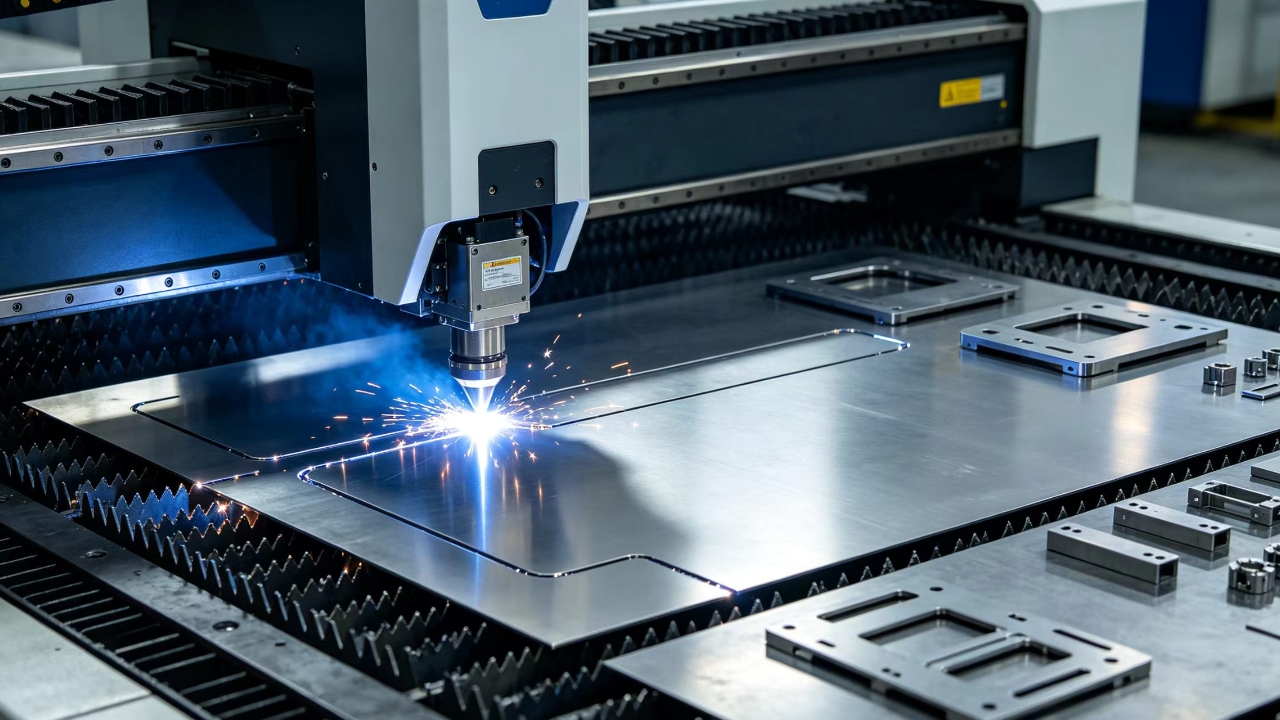
Laser cutting is generally the best option if you require accurate cutting, good edge quality and intricate designs.
Consider laser cutting if you are cutting:
Precision Components
Laser cutting can provide accurate dimensions and intricate shapes. This can help reduce fitting issues when putting your components together.
Stainless Steel Enclosures & Cabinets
Electrical enclosures, equipment and control panels often require accurate holes, mounting points and accurate dimensions. Laser cutting can help provide this.
Food Processing Equipment
Stainless steels used in food processing will require clean surfaces and good edge finishing. Laser cutting can help reduce dross and minimise any edge grinding.
Architectural & Decorative Panels
Decorative screens, stainless steel panels and bespoke metal designs will often have intricate designs. Laser cutting can provide more flexibility with designs and provide a clean finish.
When Should You Choose Plasma Cutting?
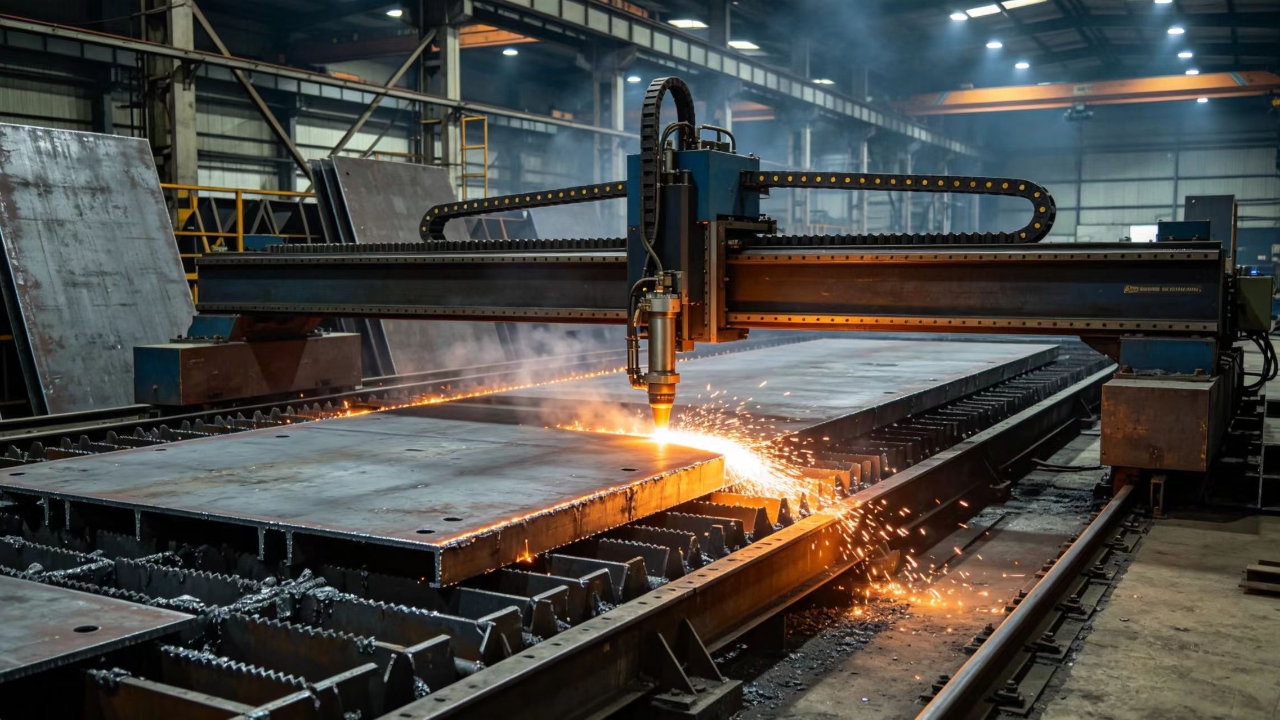
Plasma cutting can be a great option if you are cutting thick conductive materials and don’t require very tight tolerances.
Typically used for:
Heavy Structural Components
Large support plates, steel frames and structural brackets can benefit from plasma cutting.
Industrial Machine Components
Bases of heavy equipment, machine supports and large metal components will often not require good edge finishes and will focus on structural requirements and cost of processing.
Thick Metal Plates
If you require cutting stainless steel or other conductive metal plates beyond the economical cutting limit of a laser then plasma can be a great option.
Simple Profiles
If you are cutting simple profiles with wider tolerances then plasma cutting can be a cost effective option.
How to Choose the Right Cutting Method for Your Stainless Steel Project
There isn’t just one cutting method that will be best for all stainless steel fabrications. You need to think about what you require from the finished components.
Consider the following factors:
Material Thickness – Check what the recommended cutting thickness is for your material.
Tolerances – If you require accurate dimensions then laser cutting is a good option.
Edge Quality – If you will have visible edges or require minimal finishing then laser cutting is a good option.
Intricate Designs – If you have small holes, intricate shapes or decorative designs then laser cutting is generally a better option.
Overall Cost – Think about how much it will cost to cut your materials, material wastage, labour, finishing and checking.
Generally laser cutting will be the best option for most stainless steel sheet fabrication. Plasma cutting can still be a useful option for cutting thick plates and structural components.
FAQ
Can I cut stainless steel with a protective film using laser or plasma cutting?
Yes you can, however it depends on the type of protective film. Some films are designed for laser cutting. Others can produce harmful fumes and leave a residue when heated. Ensure your cutting service provider can confirm that your film is compatible.
Will laser cutting cause warping to stainless steel?
Laser cutting will add heat to the material but due to the focused beam there will be a small heat affected zone. This will help reduce warping when cutting thin stainless steels.
Which is better for intricate stainless steel designs?
Laser cutting is generally a better option. The narrow cutting line and CNC capabilities mean intricate designs can be cut with a high level of accuracy.
Will the grade of stainless steel impact laser/plasma cutting?
Yes, different grades of stainless steel will have different chemical makeups and thermal properties. This can impact how you cut your materials. For example 304 and 316 stainless steels may require different settings depending on the thickness and machine setup.
Can I use both laser and plasma cutting?
Yes you can. Some stainless steel fabrications use both techniques. Laser cutting can be used for accurate components and intricate parts. Plasma can be used for cutting thicker structural parts. This helps provide the right cutting method for your project.
Final Thoughts
Both plasma and laser cutting play an important role in stainless steel fabrication. However they can be used for different production requirements. Consider the material thickness, tolerances, edge quality and overall cost of processing. This will help improve your production and reduce any unnecessary costs.
If you are looking for bespoke stainless steel sheet fabrication then Verixor can provide you with stainless steel processing solutions to suit your requirements. Contact us today to discuss your material requirements, drawings, cutting requirements and bespoke fabrication.