
Choosing the right stainless steel pipe can affect your project’s cost, performance, and installation efficiency. With so many types, shapes, and grades available, the challenge is knowing which one actually fits your requirements. This guide helps you compare the main stainless steel pipe types and make a more confident choice.
Types of Stainless Steel Pipes by Manufacturing Method
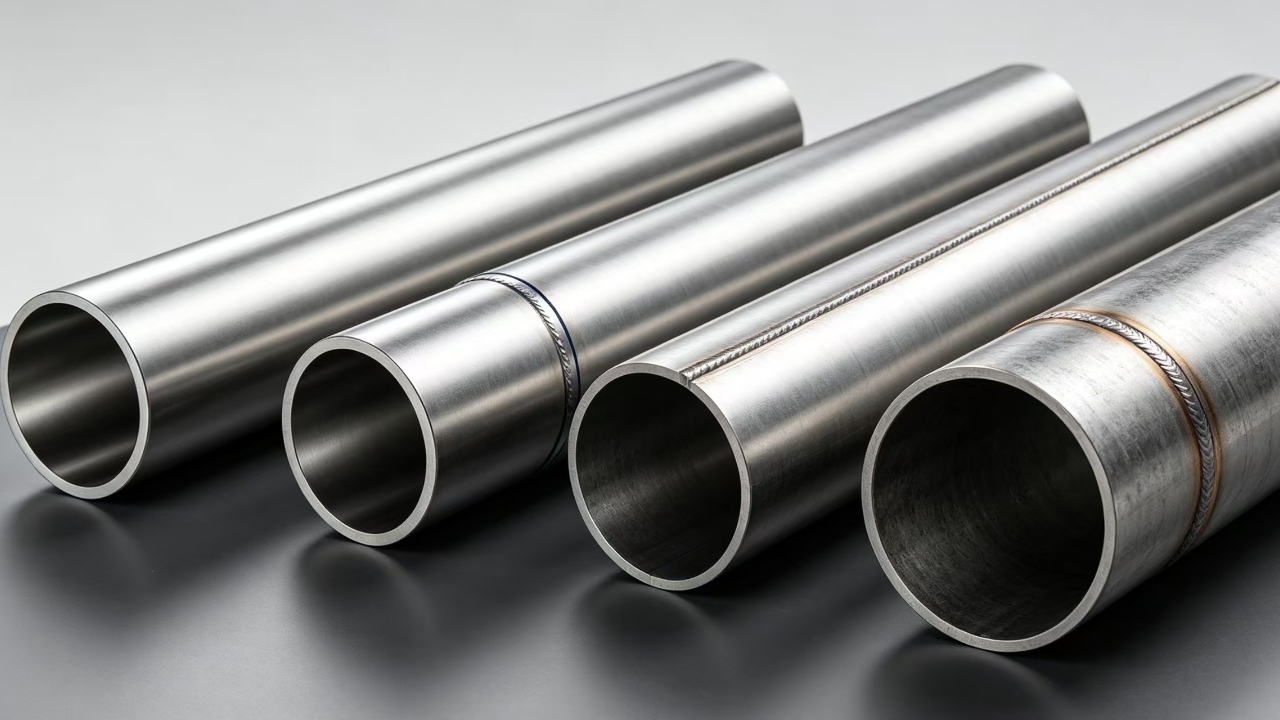
The manufacturing process has a direct effect on the pipe’s structure, dimensional consistency, available sizes, and suitability for different applications.
The main categories include seamless pipes, welded pipes, ERW pipes, and EFW pipes.
1. Seamless Stainless Steel Pipe
A seamless stainless steel pipe is produced without a welded seam. A solid steel billet is heated and pierced to create a hollow tube, which is then processed to achieve the required dimensions.
Because there is no longitudinal weld, seamless pipe is often selected when your project requires reliable performance under demanding pressure or temperature conditions. It can be used in chemical processing, oil and gas systems, power generation, and other industrial applications where pressure resistance and material reliability are important.
However, seamless construction does not automatically mean that a pipe is suitable for every project. You still need to check the material grade, wall thickness, pressure requirements, operating temperature, and applicable standards.
2. Welded Stainless Steel Pipe
Welded stainless steel pipe is manufactured by forming a stainless steel plate or strip into a tubular shape and joining the edges through welding.
This production method allows manufacturers to produce pipes in a wide range of diameters and wall thicknesses. It is commonly used in construction, industrial piping, structural applications, water transportation, and equipment fabrication where you need a practical balance between performance, availability, and manufacturing cost.
When sourcing welded stainless steel pipe, you should pay attention not only to the pipe grade but also to weld quality, surface condition, dimensional tolerance, and inspection requirements.
3. ERW Stainless Steel Pipe
ERW stands for Electric Resistance Welding. During production, the stainless steel strip is formed into a tube, and electrical resistance is used to generate heat that joins the edges together.
ERW stainless steel pipe is suitable for projects that require consistent dimensions and efficient production. You may use it for general industrial piping, structural components, water and fluid transportation, machinery, and construction projects where the required pressure and performance specifications can be met.
If your project requires large quantities of pipes with consistent dimensions, ERW can be a practical manufacturing option. You should still confirm that the available specifications meet your required pressure, material, dimensional, and testing standards.
4. EFW Stainless Steel Pipe
EFW stands for Electric Fusion Welding. Unlike resistance welding, EFW uses an electric arc to generate heat and fuse the pipe material. It is often considered for larger-diameter and thicker-wall pipes.
EFW stainless steel pipe can be used in industrial piping, chemical processing, energy facilities, and other applications where larger dimensions or thicker walls are required. When selecting this type, you should evaluate the pipe diameter, wall thickness, stainless steel grade, welding requirements, pressure conditions, and inspection standards together.
The manufacturing method should match the actual requirements of your project rather than being selected based only on price.
Types of Stainless Steel Pipes by Shape
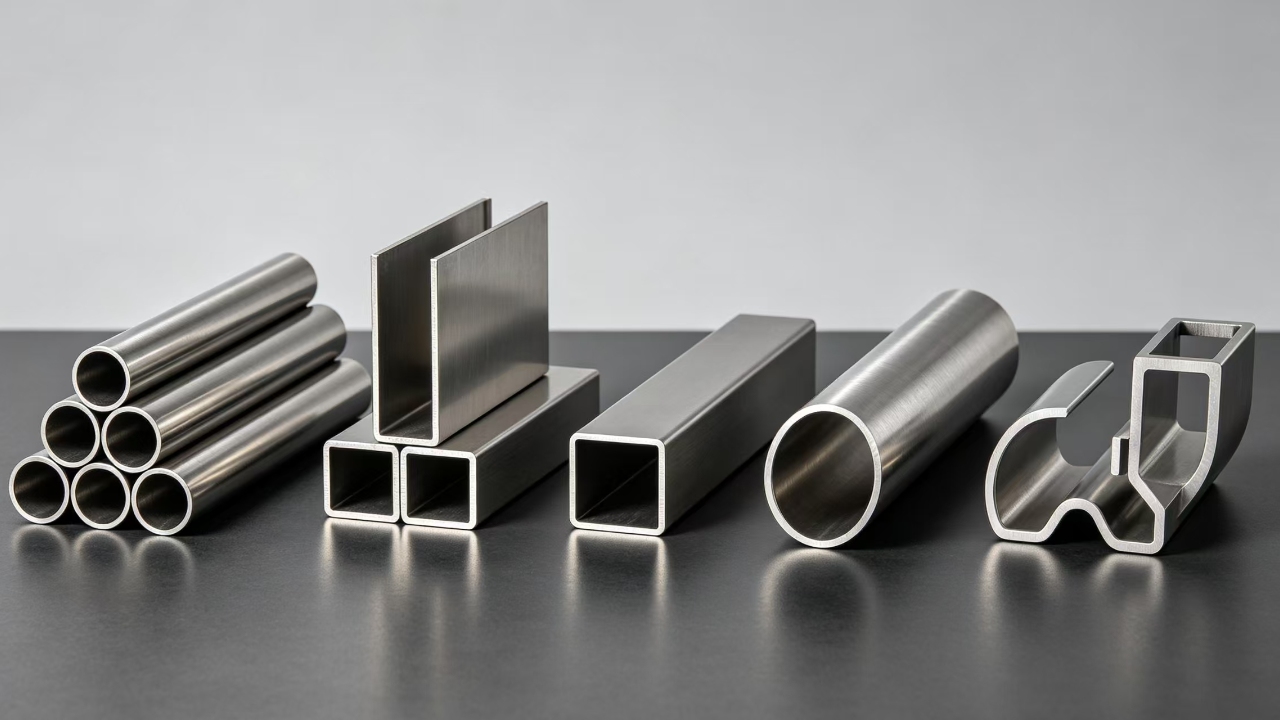
The shape of a stainless steel pipe affects more than its appearance. It can influence load distribution, connection methods, available space, fabrication, and the final appearance of your project.
1. Round Stainless Steel Pipe
Round pipe is the most common stainless steel pipe shape. Its circular cross-section allows fluids and gases to move efficiently while also providing reliable structural performance.
You may choose round stainless steel pipe for fluid and gas transportation, industrial piping, handrails, guardrails, structural components, and machinery. Because round pipe is widely available in different diameters and wall thicknesses, it is often easier to match standard project specifications.
2. Square Stainless Steel Pipe
Square stainless steel pipe has four equal sides and a consistent cross-section. Its straight surfaces make it convenient when you need to connect, fabricate, or assemble components with flat faces.
It is commonly used for structural frames, railings, architectural structures, furniture, equipment frames, and interior or exterior fabrication. If appearance is important to your project, you should also consider the surface finish because the flat faces make the finish highly visible.
3. Rectangular Stainless Steel Pipe
Rectangular stainless steel pipe has two different side dimensions, giving you more flexibility when space or structural requirements are not symmetrical.
It can be used for building structures, architectural frames, machinery, transportation equipment, and commercial or industrial fabrication. When specifying a rectangular pipe, make sure you provide the outside dimensions, wall thickness, length, grade, and surface requirements clearly to avoid specification errors.
4. Oval Stainless Steel Pipe
The oval stainless steel pipe has a rounded, elongated cross-section. Compared with conventional round pipe, its shape provides a different visual appearance and can help you work within specific space constraints.
Oval stainless steel pipe is often considered for architectural applications, decorative structures, handrails, furniture, and transportation components. For projects where appearance is important, you should evaluate the pipe shape together with the surface finish rather than treating them as separate decisions.
5. Custom-Shaped Stainless Steel Pipe
Not every project can be solved with a standard round, square, or rectangular pipe. Custom-shaped stainless steel pipes can be manufactured according to specific drawings or dimensional requirements.
They can be used for specialized architectural structures, decorative components, machinery, equipment, and project-specific structural applications where standard profiles cannot meet the required geometry. If you require a non-standard shape, your technical drawing should clearly define the cross-section, dimensions, tolerances, material grade, wall thickness, and surface requirements.
Types of Stainless Steel Pipes by Alloy Grade

The stainless steel grade is one of the most important decisions you make during procurement. Different alloy families contain different proportions of elements such as chromium, nickel, molybdenum, and carbon, which affect corrosion resistance, mechanical properties, temperature performance, weldability, and cost.
1. Austenitic Stainless Steel Pipe
Austenitic stainless steel is one of the most widely used stainless steel families. Common grades include 304 and 316, although many other grades are available for specialized requirements.
Austenitic stainless steel pipes are widely used in food processing, chemical equipment, architectural applications, water systems, pharmaceutical facilities, and general industrial environments. Grade 304 is commonly selected for general corrosion resistance, while 316 is often considered for environments where additional resistance to certain corrosive conditions is required.
When choosing between grades, you should consider the actual operating environment rather than selecting a grade simply because it is commonly used.
2. Ferritic Stainless Steel Pipe
Ferritic stainless steels generally contain chromium as the main alloying element and have a lower nickel content than many austenitic grades. They can provide good oxidation resistance and corrosion resistance in suitable environments.
Ferritic stainless steel pipes can be used in automotive components, appliances, architectural elements, exhaust systems, and selected industrial equipment. They can be a practical option when your project requires moderate corrosion resistance and specific mechanical or cost considerations.
However, ferritic grades are not interchangeable with austenitic grades. You should select them according to the working environment, fabrication method, and mechanical requirements of your project.
3. Duplex Stainless Steel Pipe
Duplex stainless steel combines characteristics of austenitic and ferritic stainless steels. Its two-phase microstructure provides a combination of high strength and corrosion resistance.
You may consider duplex stainless steel pipe for demanding applications such as oil and gas systems, chemical processing, marine environments, petrochemical equipment, and other high-performance industrial piping. Its higher strength can allow more efficient material use in some designs, although the final specification should always follow the applicable engineering requirements.
4. Martensitic Stainless Steel Pipe
Martensitic stainless steels are generally selected when higher hardness and strength are important. They can be heat treated to achieve different mechanical properties, making them useful for applications where mechanical strength and wear resistance are key requirements.
They can be used in mechanical components, industrial equipment, pumps, valves, and other specialized engineering applications. If your project involves welding, machining, or heat treatment, you should confirm the specific grade requirements before production because different martensitic grades can have different processing characteristics.
5. Precipitation-Hardening Stainless Steel Pipe
Precipitation-hardening, or PH stainless steel, is designed to achieve high strength through heat treatment. These stainless steels can provide a combination of corrosion resistance and high mechanical strength.
PH stainless steel pipes are generally considered for specialized applications such as aerospace components, high-strength machinery, chemical equipment, energy systems, and other demanding engineering applications. Because these materials are more specialized, you should evaluate the required mechanical properties, corrosion environment, heat-treatment condition, and applicable specifications before making a selection.
How to Choose the Right Stainless Steel Pipe?
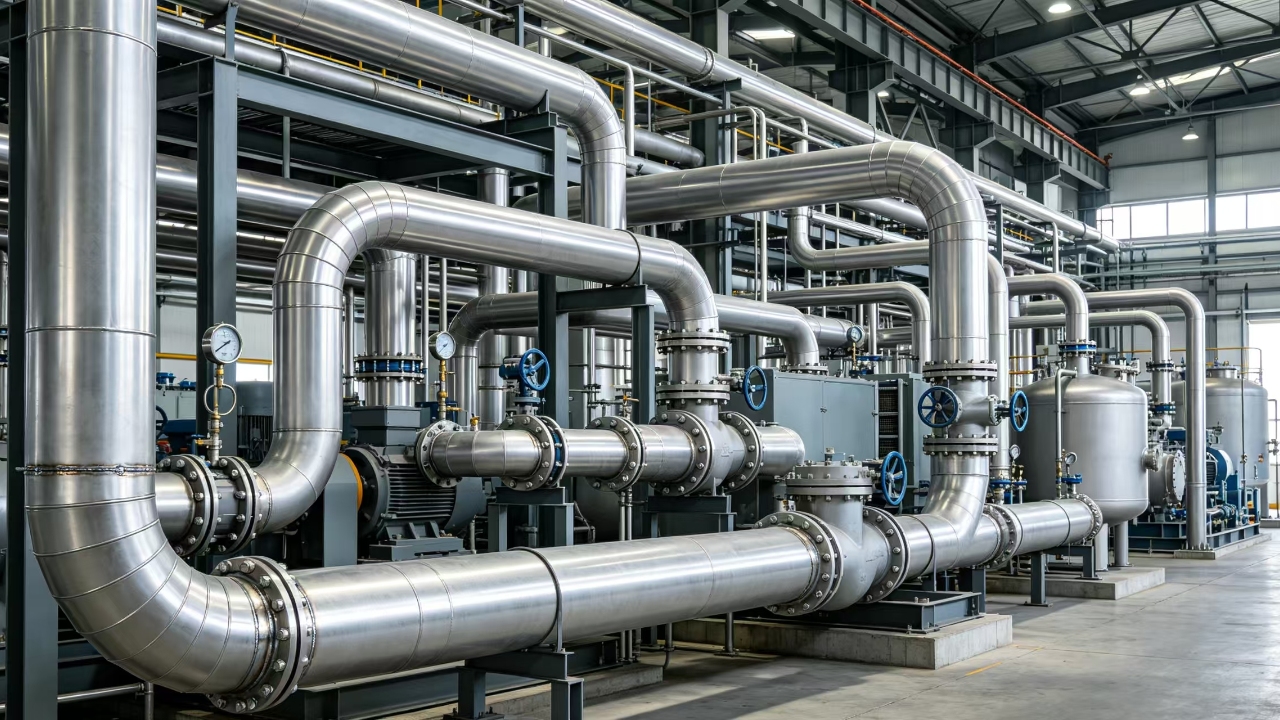
The right stainless steel pipe can save you from costly changes later. Before you order, look at the application, material, size, and pressure requirements to make sure the pipe fits your project.
1. Determine the Application
First, identify how the stainless steel pipe will be used. Structural projects usually focus on strength, dimensions, and load-bearing capacity. Sanitary applications place greater emphasis on surface quality, cleanliness, and corrosion resistance, while high-pressure systems require careful consideration of pressure resistance and overall pipe reliability.
2. Choose the Right Material Grade
Different stainless steel grades offer different levels of corrosion resistance, strength, and cost. 304 stainless steel is suitable for most general applications, while 316 stainless steel provides better corrosion resistance and is more suitable for salty, humid, or highly corrosive environments. 201 stainless steel is often used for projects where cost is a key consideration and the corrosion requirements are relatively low.
3. Choose Between Seamless and Welded Pipes
The manufacturing method affects pipe performance, available specifications, and purchasing costs. Seamless stainless steel pipes have no weld seam and are generally suitable for high-pressure, high-temperature, or applications where greater pipe integrity is required. Welded pipes are formed through welding and offer flexible specifications and better cost efficiency for many standard structural and fluid-transport applications.
4. Determine the Pipe Diameter and Wall Thickness
Pipe diameter and wall thickness should be selected according to the required flow rate, working pressure, and installation conditions. For fluid-transport applications, pipe diameter directly affects flow rate and pressure drop. For structural applications, you should consider the load requirements and the overall structure. After determining the dimensions, also confirm whether the outside diameter, inside diameter, and wall thickness tolerances meet the required project standards.
5. Specify the Length and Surface Finish
Determining the required pipe length in advance can reduce on-site cutting and processing, helping improve installation efficiency. Surface finish should also be selected according to the application environment and appearance requirements. Options such as pickled, brushed, and mirror-polished finishes can meet different requirements for corrosion resistance, cleanliness, and appearance.
6. Check Relevant Certifications and Standards
Before placing a bulk order, confirm that the stainless steel pipes meet the standards and certifications required for your project, such as ASTM, ISO, or customer-specific technical specifications. You should also check material certificates, dimensional tolerances, mechanical properties, and relevant inspection documents to ensure the products meet project acceptance and quality-control requirements.
FAQ
What makes an oval stainless steel pipe different from a round pipe?
Oval pipe provides an elongated cross-section that can offer a different appearance and fit certain space requirements. It is often considered when both visual design and available installation space are important.
Are seamless stainless steel pipes more expensive than welded pipes?
Seamless pipes are generally more costly because of their manufacturing process. However, the actual cost should be evaluated together with the required specifications, quantity, material grade, and project performance requirements.
Can the weld area of a stainless steel pipe be finished or treated?
Yes. Depending on the product requirements, the weld area can undergo additional finishing or treatment to achieve a more consistent surface appearance. The required treatment should be specified before production.
Can ferritic stainless steel pipes be used for applications requiring a clean appearance?
Yes, provided the selected grade and surface finish meet the project requirements. For visible installations, you should define the required surface condition and appearance standard before production.
Why should the final mechanical requirements be confirmed before ordering PH stainless steel pipe?
PH stainless steel is often selected for applications with demanding strength requirements. Confirming the required mechanical properties in advance helps ensure that the material condition and final product specifications match the project requirements.
Final Thoughts
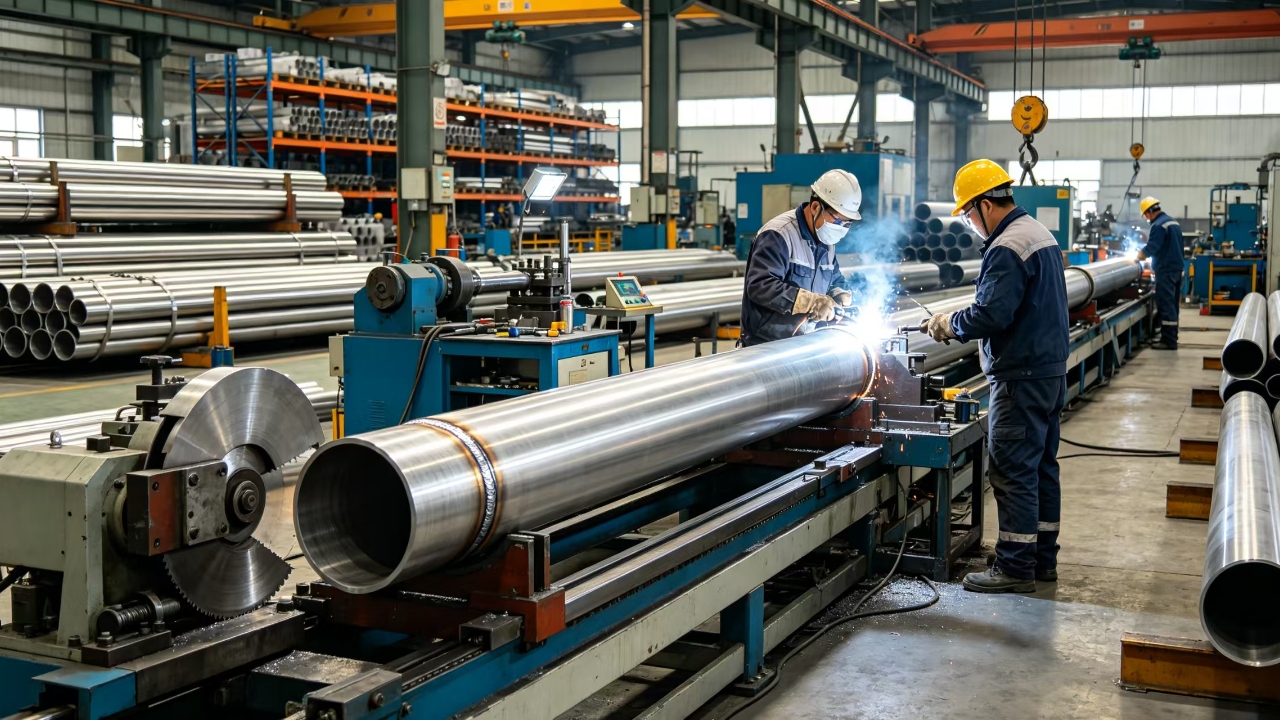
Stainless steel pipes come in different types, shapes, and grades for different project needs. Understanding these differences helps you make a more suitable choice.
Verixor provides customized stainless steel pipe solutions based on your specifications, dimensions, materials, and finishing requirements. Contact us today to discuss your project needs.